


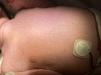
An infant born at 40 weeks with a weight of 4090 g presented on day 18 post birth with severe hypernatremic dehydration (sodium 194 mmol/L), malnutrition, cerebral venous thrombosis and acute kidney injury (creatinine, 1.46 mg/dL). The skin pinch test caused prolonged tenting (Fig. 1). Gradual intravenous rehydration reduced the serum sodium level to 160 mmol/L within 48 h. Three days later, the patient developed multiple superficial vesicular lesions over the trunk (Fig. 2). The condition was diagnosed as miliaria crystallina (MC) and all lesions resolved within five days with supportive skin care.


Miliaria crystallina is a benign sweat retention disorder caused by obstruction of the eccrine ducts by the overlying stratum corneum, causing sweat to leak into the upper epidermis.1,2 It typically occurs in neonates exposed to warm, humid environments but may also arise in other contexts.2,3 In this case, MC developed during the correction of hypernatremia.
Although elevated sodium suppresses aldosterone – reducing sodium reabsorption in sweat glands – MC rarely occurs at the peak of hypernatremia, but rather during or after its correction. One hypothesis proposes that the initial hypovolemia stimulates aldosterone to retain sodium, though this may fail without adequate feeding. As hydration improves, aldosterone levels may fall, increasing sweat sodium loss and promoting ductal obstruction.
Previous reports describing MC associated with sodium shifts, including pseudohypoaldosteronism,3 supports a hormonal influence on eccrine function. This case illustrates the importance of recognizing benign skin findings such as MC in critically ill neonates. Awareness of its self-limited course can prevent unnecessary disgnostic or therapeutic interventions, which is particularly relevant in patients recovering from severe metabolic disturbances.
FundingThis study did not receive any form of funding.
The authors declare no conflicts of interest.