We report the case of a previously healthy infant with a one-week history of respiratory symptoms and four days of fever who developed progressive purpuric and petechial lesions in the hours preceding admission.
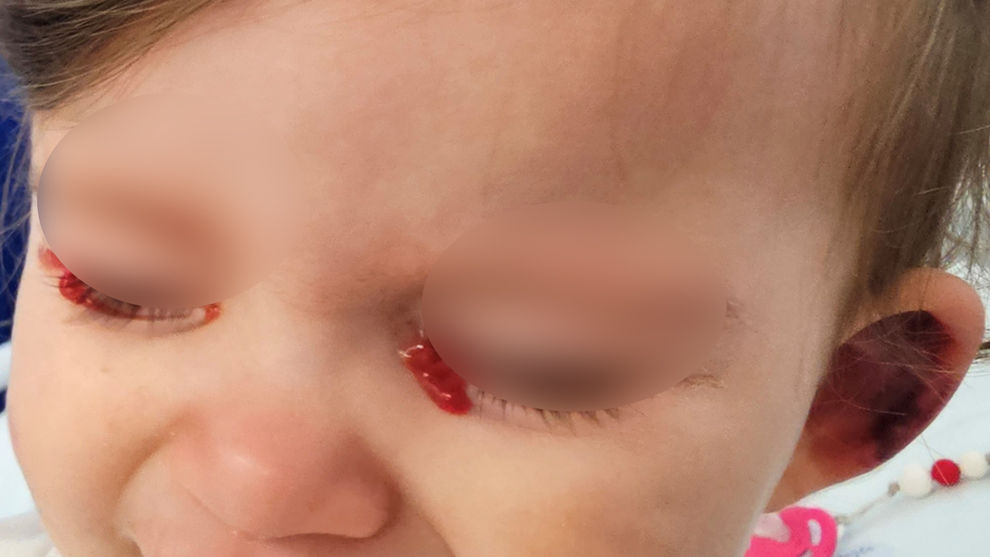
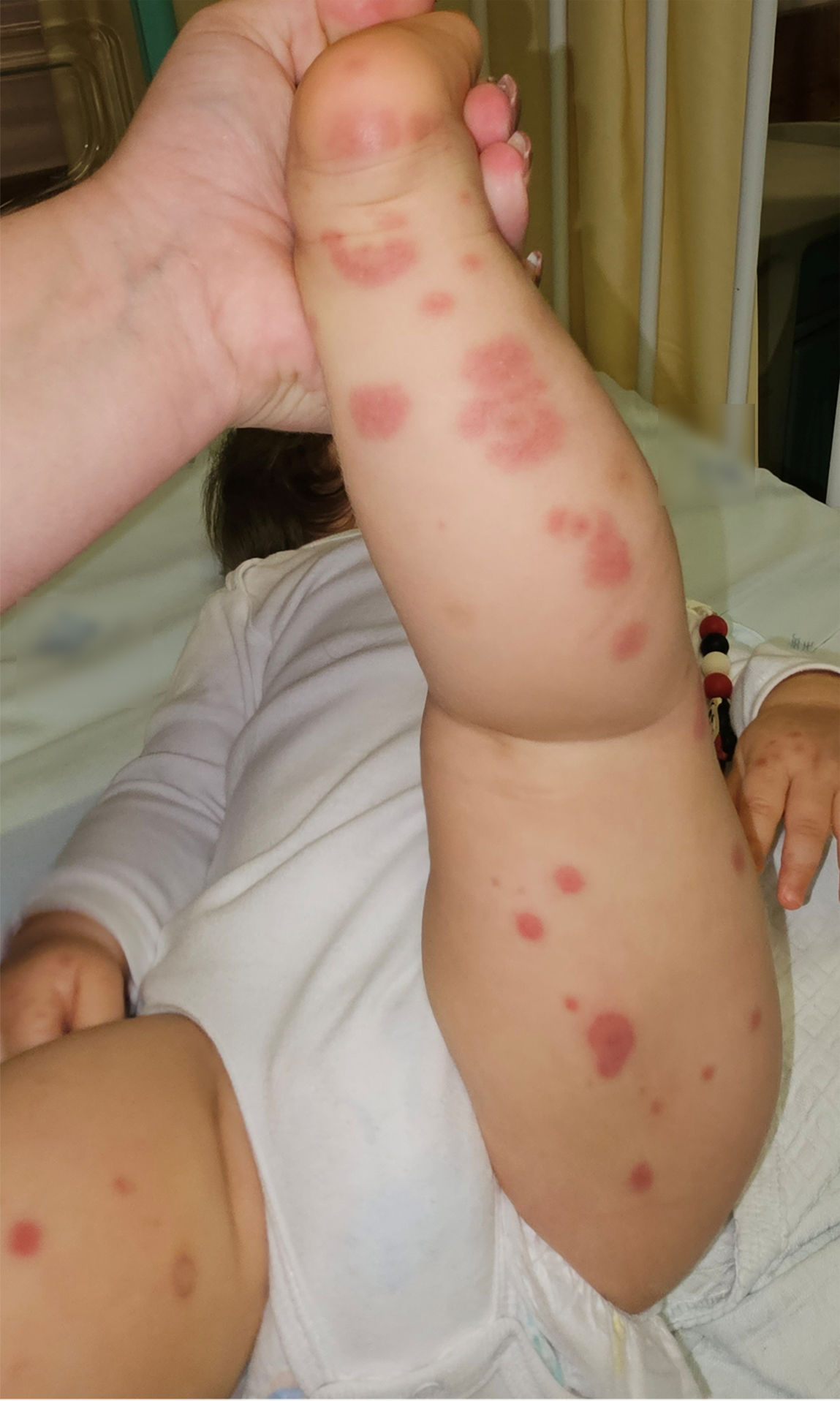
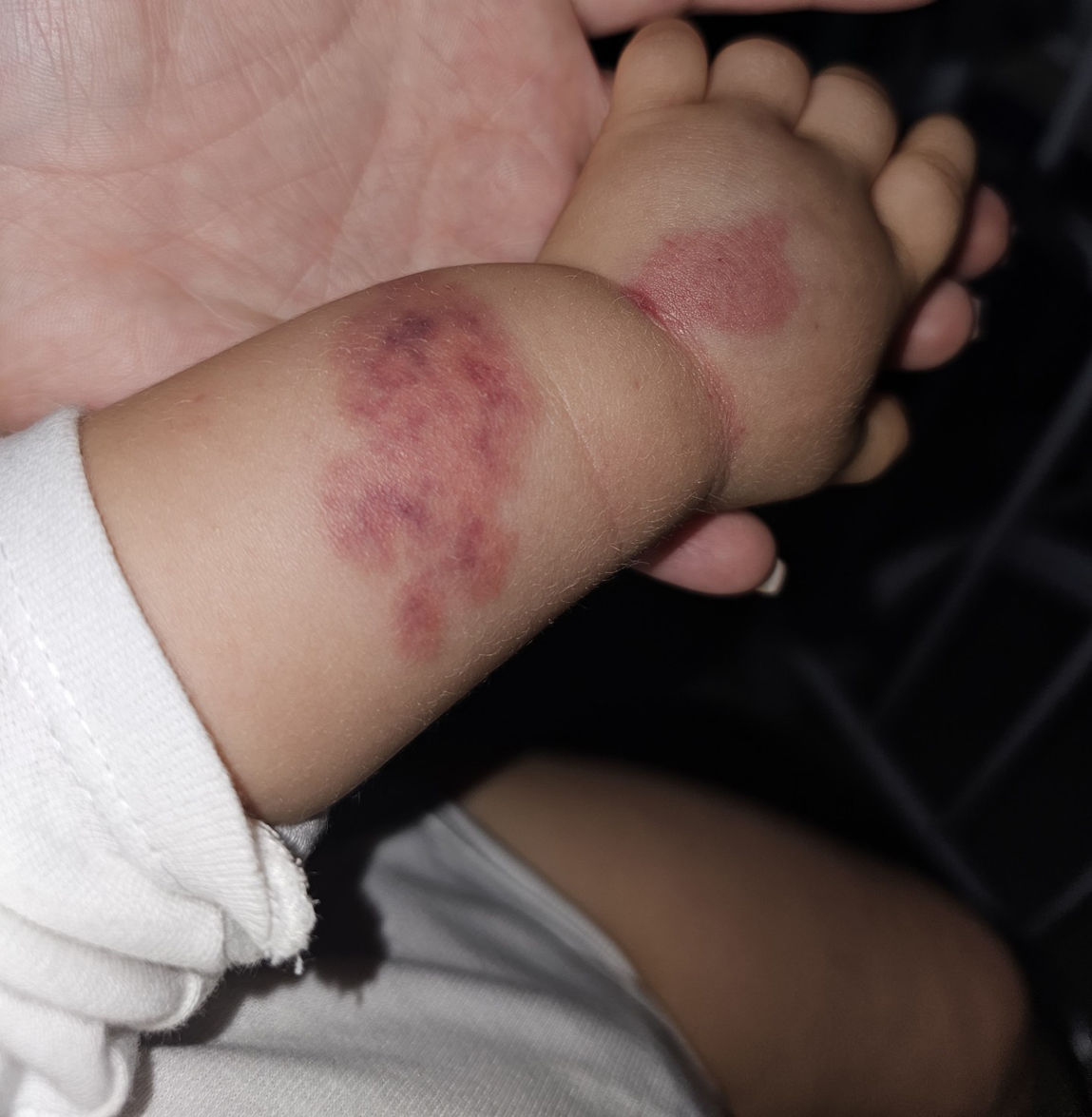
On examination, she was hemodynamically stable and well-appearing, with hemolacria of recent onset and purpuric lesions on the earlobes (Fig. 1), as well as multiple targetoid purpuric and petechial lesions most evident on the extremities (Fig. 2). During observation, the rash worsened and peripheral edema developed (Fig. 3). Laboratory findings were unremarkable with the exception of mild elevation of C-reactive protein (8.7 mg/L) and the presence of atypical lymphocytes in the peripheral blood smear.


A presumptive diagnosis of acute hemorrhagic edema of infancy (AHEI) was made, and the patient was managed with supportive care and close clinical monitoring. The clinical course was favorable, with no further episodes of hemolacria, and the patient was asymptomatic at discharge.
Acute hemorrhagic edema of infancy is a rare small-vessel leukocytoclastic vasculitis of infancy and early childhood. It is characterized by the abrupt onset of targetoid purpuric lesions, nonpitting edema and fever and it is typically benign and self-limiting.1–3
To the best of our knowledge, this is the first report of hemolacria as a clinical manifestation of AHEI. This case highlights the importance of prompt recognition to ensure appropriate conservative management, even in atypical presentations.