
Thunderstorm asthma (TA) refers to a rare phenomenon of acute onset or exacerbation of asthma within the 24–48 h following a thunderstorm resulting in a rapid increase in the volume of medical visits due to severe respiratory problems. This phenomenon is chiefly attributed to the rupture of pollens in smaller fragments—although the mechanism may also involve other allergens, such as mold and fungal spores—due to the high humidity, strong winds and electrostatic charges in the atmosphere that facilitate the formation of microscopic airborne particles measuring less than 10 μm. Thunderstorm asthma was first described in 1985 in the United Kingdom, where there was a surge of visits due to asthma associated with peak levels of fungal spores. Since then, similar outbreaks have been described in other areas, such as Australia, China, Italy or Canada. Most studies to date have been consisted in reporting that a majority of affected individuals did not have a previous diagnosis of asthma, although many had a history of allergic rhinitis. Our objective was to determine the trigger of observed episodes, their association with the weather event and the clinical characteristics of affected patients.1,2
We conducted a retrospective descriptive study including all patients treated for asthma attacks in the pediatric emergency department of a tertiary care hospital in Valladolid, Spain, between May 1 and June 30, 2025. We also included episodes recorded in the 48 h following the storm on May 30, 2025. We collected clinical and demographic data (age, sex, history of asthma or allergic rhinitis), along with meteorological, aerobiological (pollen and mold) and air pollutant data. Patients were included based on the diagnostic codes recorded in the emergency department and the review of health records. We retrieved environmental data from official sources (weather stations, airborne particle counters).
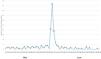
Next, we compared the variables of interest in the peak period (48 h after the storm) versus the rest of the study period. Continuous data are expressed as mean (SD). In the 48 -h period following the storm on May 30, 2025, the department treated a total of 87 patients, amounting to 28% of visits during this time window, for respiratory complaints, compared to 88 patients treated during the rest of May and June, who accounted for only 1.7% of all visits in that period (Fig. 1). Of the patients treated during these 48 h, 65 (74%) were male. Fifty-seven percent of episodes were of moderate severity (based on the pulmonary score), 4% were severe and the rest were mild. Seventy-eight percent of the patients did not have a previous diagnosis of asthma and 80% had a history of allergic rhinitis. The mean (SD) age was 9.1 (3.3) years for the entire sample, 9.4 (2.9) years for male patients and 8.8 (3.3) years for female patients (P < .05).

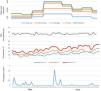
As for the environmental data (Fig. 2), the storm generated 16 mm of precipitation in 2 h, which was 9.6 times greater compared to the mean for other storms in the study period. Temperatures rose from an average of 13.3 °C (May) to 20.3 °C (48 h after the storm) and remained steady in June. Other parameters, such as average pressure (27.2 vs 27.3 in. and maximum wind speed (10.1 vs 13.4 mph), remained similar in both months.3 Pollen levels were very high for Quercus (139 g/m3), moderate for grasses (47 g/m3) and low for Plantago, Platanus and Pinus (9, 9 and 7 g/m3, respectively). According to data recorded over the past 20 years in this region, peak levels of Alternaria (4500–8385 spores) and Clasporium (93 744−150 144 spores) occur during the cereal harvest season (May-July), with levels decreasing after the harvest concludes.4

Two similar episodes have been documented in pediatric populations with demographic characteristics very similar to those of our patients. One took place in Yulin, China (September 2017), with a predominance of male patients and a mean age of 7 years; 57% did not have a previous diagnosis of asthma and 66% had seasonal allergic rhinitis.5 Another took place in London (June 2023), with a mean age of 8 years, a predominance of male patients (75%) and 57% of patients without a previous diagnosis of asthma, 44% with eczema or hay fever, 10% with other allergies and 12% without a known history of atopy.6
The outbreak we report is particularly relevant in light of the changes in weather patterns we are experiencing in Spain, with more frequent high-intensity storms in recent years. Our findings suggest that the combination of high levels of pollen and fungal spores and extreme weather conditions can trigger significant peaks in asthma exacerbations in children without a clear history of asthma.