
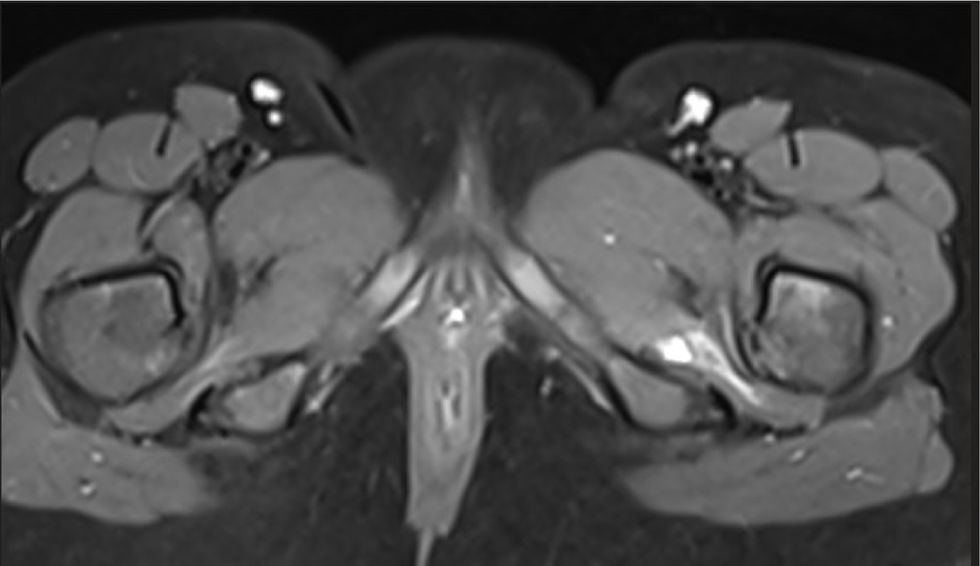
A female toddler aged 3 years was brought to the emergency department with right-sided gait claudication that developed two days prior, treated with ibuprofen on the first day. The mother denied any history of falls or major trauma and reported a single febrile peak (38.5 °C). Morphine was administered to manage severe pain on mobilization of the right hip. The findings of laboratory tests, the plain radiograph and the hip ultrasound were normal.
Intravenous antibiotherapy (cefuroxime and flucloxacillin) was initiated due to suspected musculoskeletal infection, with the patient remaining at rest, on which the symptoms resolved. The pelvic MRI revealed “diffuse muscle edema of the bilateral quadratus femoris muscles, compatible with ischiofemoral impingement syndrome” (Fig. 1), and antibiotic therapy was discontinued. In a subsequent interview, the mother reported that on the day prior to onset, the patient had repeatedly climbed and descended several stairs and platform at a playground.

This syndrome results from successive impacts, leading to narrowing of the ischiofemoral space with subsequent muscle inflammation and edema.1,2 The clinical severity may not always correlate to the MRI findings. It is rare in the pediatric population and is often overlooked in the differential diagnosis of hip pain. Although infectious myositis is more common at this age, it was considered unlikely in this case due to the presence of only a single febrile episode, absence of systemic involvement, normal inflammatory markers (including leukocyte count, C-reactive protein, and procalcitonin) and lack of MRI findings suggestive of infectious myositis, such as liquefaction, necrosis or extensive muscle edema. Management of this syndrome is usually conservative (rest and nonsteroidal anti-inflammatories), with a favorable prognosis.1,2
The authors declare no conflicts of interest.