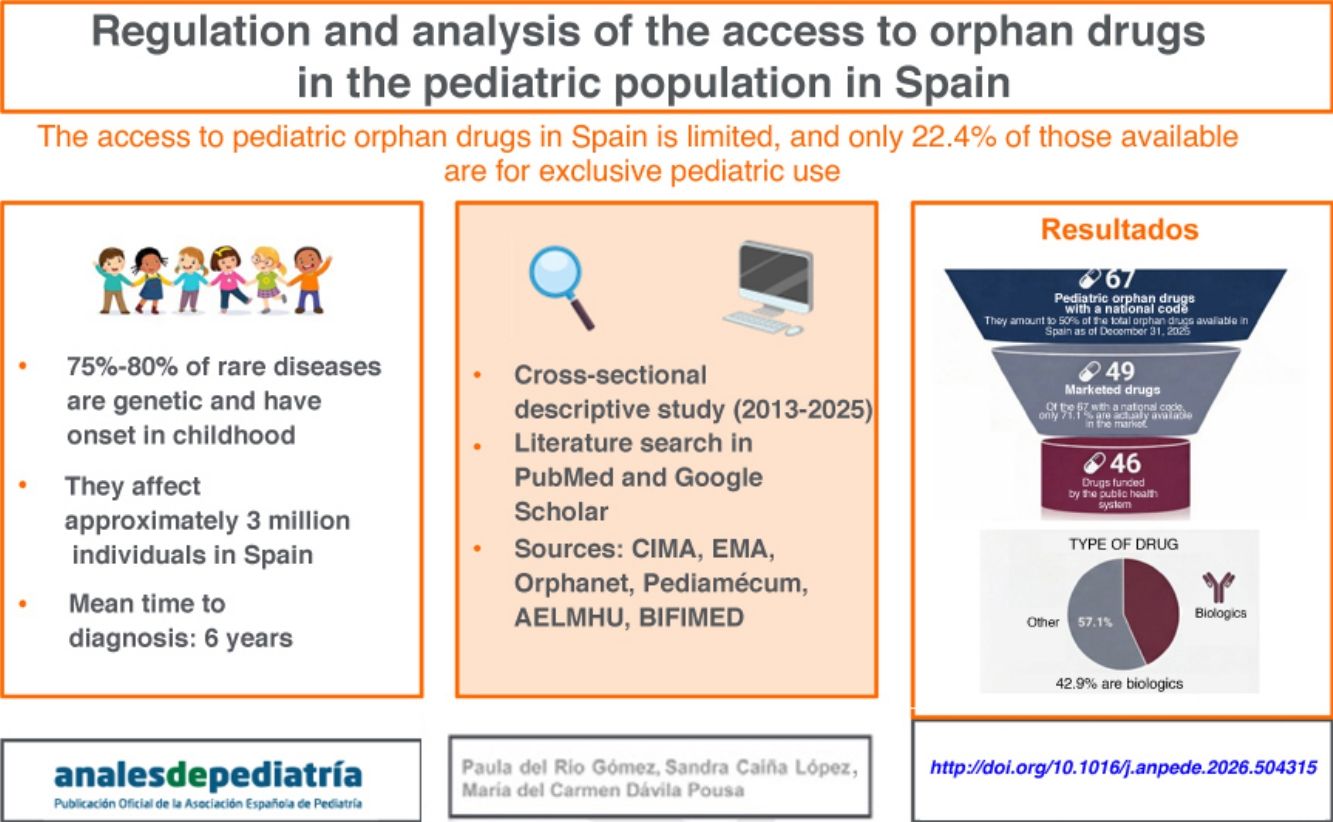
Between 70% and 80% of rare diseases are of genetic origin, so most of them have onset during childhood. They share common features, including delayed or absent diagnosis; being severe, chronic, and disabling; lack of effective treatments; and insufficient knowledge or awareness among health care professionals and society at large. Their management frequently requires specific treatment with orphan drugs. However, the development of pediatric orphan drugs and their accessibility continue to be limited. The aim of this study was to describe the situation of pediatric orphan drugs in Spain as of December 31, 2025.
MethodsCross-sectional descriptive study based on the review of the scientific literature and regulatory databases between 2013 and 2025. We identified all the orphan drugs included in the CIMA database of the Spanish Agency of Medicines and Medical Devices (AEMPS) and reviewed their summaries of product characteristics to determine their pediatric indications. We analyzed variables related to the authorization, commercialization, funding, and clinical characteristics of the drugs.
ResultsWe identified a total of 67 orphan drugs with pediatric indications authorized in Spain, which amounted to 50% of all orphan drugs. Of these, 22.4% were only indicated for pediatric use. Forty-nine (73.1%) were marketed and 46 were funded by the Spanish national health system, with restrictions in 63% of the funded cases.
ConclusionsOrphan drugs with pediatric indications remain a minority among orphan drugs. Pediatric clinical research needs to be reinforced, and strategies implemented to ensure more agile, equitable, and coordinated access. This study provides an updated overview based on official regulatory sources, although it did not allow the assessment of aspects such as access times or regional variability.
Entre el 70% y el 80% de las enfermedades raras son de origen genético, por lo que la mayor parte de ellas debutan en la infancia. Comparten elementos comunes, como diagnóstico tardío o falta de diagnóstico; gravedad, cronicidad y carácter incapacitante; ausencia de tratamientos efectivos, y falta de conocimiento o información de los profesionales sanitarios y de la sociedad en general. El abordaje terapéutico requiere con frecuencia tratamientos específicos mediante medicamentos huérfanos. No obstante, el desarrollo y el acceso efectivo a medicamentos huérfanos pediátricos continúa siendo limitado. El objetivo es describir la situación de los medicamentos huérfanos pediátricos en España a 31 de diciembre de 2025.
MétodoEstudio descriptivo transversal basado en la revisión de fuentes bibliográficas y bases de datos regulatorias entre 2013 y 2025. Se identificaron todos los medicamentos huérfanos incluidos en la base de datos CIMA de la Agencia Española de Medicamentos y Productos Sanitarios, revisando de forma individualizada sus fichas técnicas para determinar la indicación pediátrica. Se analizaron variables relacionadas con autorización, comercialización, financiación y características clínicas de los medicamentos.
ResultadosSe identificaron 67 medicamentos huérfanos con indicación pediátrica autorizados en España, lo que representa el 50% del total de medicamentos huérfanos. De ellos, el 22,4% eran de uso exclusivo pediátrico. 49 (73,1%) estaban comercializados y 46 financiados por el Sistema Nacional de Salud, con restricciones en el 63% de los casos financiados.
ConclusionesLos medicamentos huérfanos con indicación pediátrica continúan siendo minoritarios. Es necesario reforzar la investigación clínica en población infantil y promover estrategias que garanticen un acceso más ágil, equitativo y coordinado. Este estudio proporciona una visión actualizada basada en fuentes regulatorias oficiales, sin evaluar otros aspectos como los tiempos de acceso o la variabilidad territorial.

The European Union (EU) defines rare diseases (RDs) as those with a prevalence of fewer than 5 cases per 10 000 inhabitants. Although there is no universally accepted definition, low frequency is the main shared criterion, with thresholds that vary between regions.1 The term “ultra-rare disease” or “extremely rare disease” is used when the prevalence is less than 1 case per 50 000 inhabitants.2
The World Health Organization (WHO) estimates that there are between 5000 and 8000 RDs, which collectively affect more than 300 million people worldwide, approximately 30 million in the EU, and nearly 3 million in Spain.1,3
In addition to their low prevalence, and given that the majority are chronic illnesses, RDs are characterized by their substantial clinical severity, as they are highly debilitating and, in many cases, life-threatening.1
Since a high proportion of RDs in children are congenital anomalies and genetic disorders, most cases (75%) have onset during childhood, and 60% manifest before age 2 years. They are associated with a high mortality, especially in the first years of life, so affected individuals constitute a particularly vulnerable population.4,5
Diagnostic complexity is one of the main barriers to the management of RDs. In Spain, according to the Federación Española de Enfermedades Raras (FEDER, Spanish Federation for Rare Diseases), the mean time to diagnosis is approximately 6 years. During this period, a substantial proportion of patients do not receive appropriate treatment or experience clinical deterioration, with a negative impact on disease outcomes as well as quality of life. This is compounded by a high level of dissatisfaction with health care services, largely attributed to the limited knowledge of health care professionals about these diseases.1,6
From an organizational standpoint, the EU has launched various initiatives to improve care coordination and access to specialized care, including the European Reference Networks, established in accordance with Directive 2011/24/EU. However, in Spain, public health services are decentralized and managed at the regional level by the governments of each of the autonomous communities (ACs), which results in variation in the access to diagnostic and therapeutic resources.2
In the EU, an orphan medicinal product (OMP), also known as orphan drug, is defined as a product that is intended for the diagnosis, prevention, or treatment of a life-threatening, seriously debilitating or serious and chronic condition affecting no more than 5 in 10 000 inhabitants, and whose marketing in the Community is unlikely to generate sufficient return to justify the necessary investment without additional incentives.7 In addition, if a similar product already exists in the market, the authorization of a new product requires evidence of significant additional benefits in the form of a new mechanism of action, a relevant improvement in efficacy or safety, or a route of administration that is more convenient for patients.8,9
Thus, OMPs, while being of little economic interest to the pharmaceutical industry, are a necessity for public health. Although the term is usually associated with the treatment of RDs, the orphan designation applies to specific indications and not necessarily to the active ingredient overall, as a drug used for treatment of a prevalent disease may be assigned orphan status for a different indication. In addition, the designation may be assigned to drugs that have been withdrawn from the EU market for economic or therapeutic reasons, products that cannot be patented, or products authorized outside the EU for diseases that are prevalent in developing countries.10,11
To lay down a procedure for the designation of medicinal products as OMPs and to counteract the lack of interest in their development due to their low returns under normal market conditions, the European Community has established a regulatory framework, primarily through Regulation (EC) No 141/2000, which provides incentives such as scientific advice, fee reductions, and a period of market exclusivity of up to 10 years after marketing authorization.10–14 In the field of pediatric care, Regulation (EC) No 1901/2006 introduced the “Paediatric Investigation Plan” (PIP) and the possibility of extending the exclusivity period if the requirement for data on use in the pediatric population is fully met.15
Despite these policies, the development of orphan drugs faces significant challenges resulting from the low number of affected patients and the incomplete understanding of the natural history of many diseases, which require complex clinical trial designs and, in some instances, result in conditional marketing authorization or marketing authorization under exceptional circumstances.1,7
Following authorization in the EU, the actual access to orphan drugs depends on assessment, pricing, and funding processes by national competent authorities, which may take considerable time. In Spain, this process involves the assignation of a national product code (known as CN, for código nacional), a therapeutic value and economic assessment, and pricing and reimbursement decisions by the Interministerial Commission on Medicines Prices (CIMP), with the average time elapsed between EU-level authorization and commercialization in Spain exceeding one year.7,16 Different processes have been established to fast-track the development and approval of orphan drugs, such as the Priority Medicines (PRIME) initiative.9,17
In general, public funding criteria for OMPs are based on principles similar to those applied to other medicinal products, taking into account disease severity, the absence of alternatives, therapeutic value, and budget impact. However, some flexibility is allowed because of the difficulty of conducting cost-effectiveness analyses. In Spain, risk-sharing agreements are an emerging strategy that allows the public payer and the pharmaceutical industry to share the risks in relation to treatment outcomes; some ACs in Spain are starting to implement these agreements.18
The aim of this study was to describe the current landscape of pediatric OMPs in Spain as of December 31, 2025; to describe the main barriers to the access to these drugs; and to provide an overall perspective that may be useful to the health care professionals involved in their use, particularly in the hospital setting.
MethodsWe conducted a cross-sectional descriptive study based on a review of the literature and regulatory databases related to OMPs and their use in the pediatric population.
A literature search was conducted in PubMed and Google Scholar using the terms “rare diseases,” “orphan medicinal products,” “pediatric” or “children,” “access,” and “Spain” or “European Union,” in both English and Spanish. Results were limited to the 2013–2025 period.
The main sources of information were the Libro Blanco de las Enfermedades Raras en España (White Paper on Rare Diseases in Spain),9 the database of the Agencia Española de Medicamentos y Productos Sanitarios (AEMPS, Spanish Agency of Medicines and Medical Devices) and its online center of medicine information (CIMA),19 the official website of the European Medicines Agency (EMA),20 Orphanet,11 Pediamécum,21 and other documents of interest, such as the Community Register of orphan medicinal products of the European Commission,22 or the 2025 annual report on the access to orphan drugs in Spain of the Asociación Española de Laboratorios de Medicamentos Huérfanos y Ultrahuérfanos (AELMHU, Spanish Association of Laboratories of Orphan and Ultra-Orphan Drugs).23
For the analysis of active pediatric orphan designations, we downloaded the EMA orphan designations data table in January 2026.24 We selected drugs exclusively by proprietary name to eliminate active substance duplicates.
To identify orphan drugs authorized and marketed in Spain, we used the CIMA database of the AEMPS, considered the official source of information on medicinal products in Spain. We conducted an exhaustive search of all medicinal products with an orphan designation listed in the database, reviewing each of the obtained records individually.19
To determine which drugs had pediatric indications, we performed a manual review of the summary of product characteristics (SmPC) of each OMP, specifically of section 4 (“Clinical Particulars”), which specifies the therapeutic indications, posology, and age ranges for which the product is authorized. We defined pediatric OMP as those orphan drugs whose SmPC included indications for the population aged less than 18 years, independently of whether or not the drug was of exclusive pediatric use or also authorized for adult use. We classified OMPs as authorized for “exclusive pediatric use” or “use in both children and adults”.19
To determine the public funding status of each OMP, we consulted the official drug funding status information search tool (BIFIMED nomenclator).25
The analyzed variables included: type of designation, EMA marketing authorization, type of authorization, authorization and CN assignation in Spain, marketing and funding in Spain, indication, target population, therapeutic group of the Anatomical, Therapeutic, and Chemical (ATC) classification, type of prescription, route of administration, and whether the drug was a biologic. We conducted a descriptive analysis of the variables, expressing qualitative variables as absolute frequencies and percentages.
ResultsAccording to data from the AELMHU, as of December 31, 2025, there were 156 OMPs authorized in Europe. In Spain, 134 OMPs were authorized and had a national code (CN), and 103 were funded by the national health system (NHS).
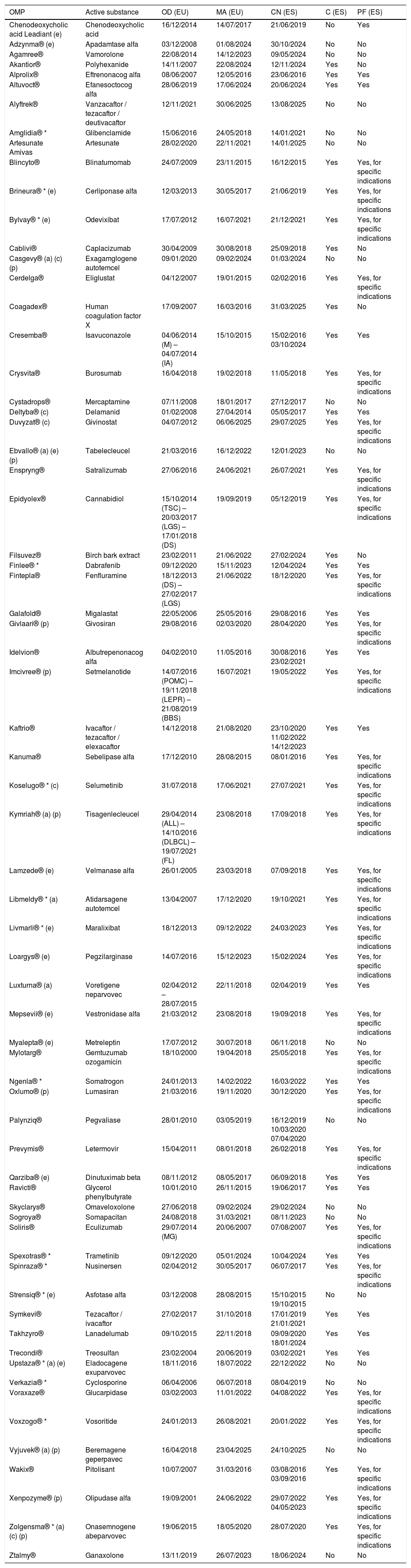
A search in CIMA identified 67 OMPs authorized for pediatric use in Spain, accounting for 50% of all authorized OMPs. Of those 67, 15 (22.4%) were for exclusive pediatric use. Eight (11.9%) were advanced therapies, 5 (7.5%) had a conditional marketing authorization, 13 (19.4%) were authorized under exceptional circumstances, and 9 (13.4%) had been granted PRIME status (Table 1).
Characteristics of orphan drugs authorized for pediatric use in Spain as of December 31, 2025.
| OMP | Active substance | OD (EU) | MA (EU) | CN (ES) | C (ES) | PF (ES) |
|---|---|---|---|---|---|---|
| Chenodeoxycholic acid Leadiant (e) | Chenodeoxycholic acid | 16/12/2014 | 14/07/2017 | 21/06/2019 | No | Yes |
| Adzynma® (e) | Apadamtase alfa | 03/12/2008 | 01/08/2024 | 30/10/2024 | No | No |
| Agamree® | Vamorolone | 22/08/2014 | 14/12/2023 | 09/05/2024 | No | No |
| Akantior® | Polyhexanide | 14/11/2007 | 22/08/2024 | 12/11/2024 | Yes | No |
| Alprolix® | Eftrenonacog alfa | 08/06/2007 | 12/05/2016 | 23/06/2016 | Yes | Yes |
| Altuvoct® | Efanesoctocog alfa | 28/06/2019 | 17/06/2024 | 20/06/2024 | Yes | Yes |
| Alyftrek® | Vanzacaftor / tezacaftor / deutivacaftor | 12/11/2021 | 30/06/2025 | 13/08/2025 | No | No |
| Amglidia® * | Glibenclamide | 15/06/2016 | 24/05/2018 | 14/01/2021 | No | No |
| Artesunate Amivas | Artesunate | 28/02/2020 | 22/11/2021 | 14/01/2025 | No | No |
| Blincyto® | Blinatumomab | 24/07/2009 | 23/11/2015 | 16/12/2015 | Yes | Yes, for specific indications |
| Brineura® * (e) | Cerliponase alfa | 12/03/2013 | 30/05/2017 | 21/06/2019 | Yes | Yes, for specific indications |
| Bylvay® * (e) | Odevixibat | 17/07/2012 | 16/07/2021 | 21/12/2021 | Yes | Yes, for specific indications |
| Cablivi® | Caplacizumab | 30/04/2009 | 30/08/2018 | 25/09/2018 | Yes | No |
| Casgevy® (a) (c) (p) | Exagamglogene autotemcel | 09/01/2020 | 09/02/2024 | 01/03/2024 | No | No |
| Cerdelga® | Eliglustat | 04/12/2007 | 19/01/2015 | 02/02/2016 | Yes | Yes, for specific indications |
| Coagadex® | Human coagulation factor X | 17/09/2007 | 16/03/2016 | 31/03/2025 | Yes | No |
| Cresemba® | Isavuconazole | 04/06/2014 (M) – 04/07/2014 (IA) | 15/10/2015 | 15/02/2016 03/10/2024 | Yes | Yes |
| Crysvita® | Burosumab | 16/04/2018 | 19/02/2018 | 11/05/2018 | Yes | Yes, for specific indications |
| Cystadrops® | Mercaptamine | 07/11/2008 | 18/01/2017 | 27/12/2017 | No | No |
| Deltyba® (c) | Delamanid | 01/02/2008 | 27/04/2014 | 05/05/2017 | Yes | Yes |
| Duvyzat® (c) | Givinostat | 04/07/2012 | 06/06/2025 | 29/07/2025 | Yes | Yes, for specific indications |
| Ebvallo® (a) (e) (p) | Tabelecleucel | 21/03/2016 | 16/12/2022 | 12/01/2023 | No | No |
| Enspryng® | Satralizumab | 27/06/2016 | 24/06/2021 | 26/07/2021 | Yes | Yes, for specific indications |
| Epidyolex® | Cannabidiol | 15/10/2014 (TSC) – 20/03/2017 (LGS) – 17/01/2018 (DS) | 19/09/2019 | 05/12/2019 | Yes | Yes, for specific indications |
| Filsuvez® | Birch bark extract | 23/02/2011 | 21/06/2022 | 27/02/2024 | Yes | No |
| Finlee® * | Dabrafenib | 09/12/2020 | 15/11/2023 | 12/04/2024 | Yes | Yes |
| Fintepla® | Fenfluramine | 18/12/2013 (DS) – 27/02/2017 (LGS) | 21/06/2022 | 18/12/2020 | Yes | Yes, for specific indications |
| Galafold® | Migalastat | 22/05/2006 | 25/05/2016 | 29/08/2016 | Yes | Yes |
| Givlaari® (p) | Givosiran | 29/08/2016 | 02/03/2020 | 28/04/2020 | Yes | Yes, for specific indications |
| Idelvion® | Albutrepenonacog alfa | 04/02/2010 | 11/05/2016 | 30/08/2016 23/02/2021 | Yes | Yes |
| Imcivree® (p) | Setmelanotide | 14/07/2016 (POMC) – 19/11/2018 (LEPR) – 21/08/2019 (BBS) | 16/07/2021 | 19/05/2022 | Yes | Yes, for specific indications |
| Kaftrio® | Ivacaftor / tezacaftor / elexacaftor | 14/12/2018 | 21/08/2020 | 23/10/2020 11/02/2022 14/12/2023 | Yes | Yes |
| Kanuma® | Sebelipase alfa | 17/12/2010 | 28/08/2015 | 08/01/2016 | Yes | Yes, for specific indications |
| Koselugo® * (c) | Selumetinib | 31/07/2018 | 17/06/2021 | 27/07/2021 | Yes | Yes, for specific indications |
| Kymriah® (a) (p) | Tisagenlecleucel | 29/04/2014 (ALL) – 14/10/2016 (DLBCL) – 19/07/2021 (FL) | 23/08/2018 | 17/09/2018 | Yes | Yes, for specific indications |
| Lamzede® (e) | Velmanase alfa | 26/01/2005 | 23/03/2018 | 07/09/2018 | Yes | Yes, for specific indications |
| Libmeldy® * (a) | Atidarsagene autotemcel | 13/04/2007 | 17/12/2020 | 19/10/2021 | Yes | Yes, for specific indications |
| Livmarli® * (e) | Maralixibat | 18/12/2013 | 09/12/2022 | 24/03/2023 | Yes | Yes, for specific indications |
| Loargys® (e) | Pegzilarginase | 14/07/2016 | 15/12/2023 | 15/02/2024 | Yes | Yes, for specific indications |
| Luxturna® (a) | Voretigene neparvovec | 02/04/2012 – 28/07/2015 | 22/11/2018 | 02/04/2019 | Yes | Yes |
| Mepsevii® (e) | Vestronidase alfa | 21/03/2012 | 23/08/2018 | 19/09/2018 | Yes | Yes, for specific indications |
| Myalepta® (e) | Metreleptin | 17/07/2012 | 30/07/2018 | 06/11/2018 | No | No |
| Mylotarg® | Gemtuzumab ozogamicin | 18/10/2000 | 19/04/2018 | 25/05/2018 | Yes | Yes, for specific indications |
| Ngenla® * | Somatrogon | 24/01/2013 | 14/02/2022 | 16/03/2022 | Yes | Yes |
| Oxlumo® (p) | Lumasiran | 21/03/2016 | 19/11/2020 | 30/12/2020 | Yes | Yes, for specific indications |
| Palynziq® | Pegvaliase | 28/01/2010 | 03/05/2019 | 16/12/2019 10/03/2020 07/04/2020 | No | No |
| Prevymis® | Letermovir | 15/04/2011 | 08/01/2018 | 26/02/2018 | Yes | Yes, for specific indications |
| Qarziba® (e) | Dinutuximab beta | 08/11/2012 | 08/05/2017 | 06/09/2018 | Yes | Yes |
| Ravicti® | Glycerol phenylbutyrate | 10/01/2010 | 26/11/2015 | 19/06/2017 | Yes | Yes |
| Skyclarys® | Omaveloxolone | 27/06/2018 | 09/02/2024 | 29/02/2024 | No | No |
| Sogroya® | Somapacitan | 24/08/2018 | 31/03/2021 | 08/11/2023 | No | No |
| Soliris® | Eculizumab | 29/07/2014 (MG) | 20/06/2007 | 07/08/2007 | Yes | Yes, for specific indications |
| Spexotras® * | Trametinib | 09/12/2020 | 05/01/2024 | 10/04/2024 | Yes | Yes |
| Spinraza® * | Nusinersen | 02/04/2012 | 30/05/2017 | 06/07/2017 | Yes | Yes, for specific indications |
| Strensiq® * (e) | Asfotase alfa | 03/12/2008 | 28/08/2015 | 15/10/2015 19/10/2015 | No | No |
| Symkevi® | Tezacaftor / ivacaftor | 27/02/2017 | 31/10/2018 | 17/01/2019 21/01/2021 | Yes | Yes |
| Takhzyro® | Lanadelumab | 09/10/2015 | 22/11/2018 | 09/09/2020 18/01/2024 | Yes | Yes |
| Trecondi® | Treosulfan | 23/02/2004 | 20/06/2019 | 03/02/2021 | Yes | Yes |
| Upstaza® * (a) (e) | Eladocagene exuparvovec | 18/11/2016 | 18/07/2022 | 22/12/2022 | No | No |
| Verkazia® * | Cyclosporine | 06/04/2006 | 06/07/2018 | 08/04/2019 | No | No |
| Voraxaze® | Glucarpidase | 03/02/2003 | 11/01/2022 | 04/08/2022 | Yes | Yes, for specific indications |
| Voxzogo® * | Vosoritide | 24/01/2013 | 26/08/2021 | 20/01/2022 | Yes | Yes, for specific indications |
| Vyjuvek® (a) (p) | Beremagene geperpavec | 16/04/2018 | 23/04/2025 | 24/10/2025 | No | No |
| Wakix® | Pitolisant | 10/07/2007 | 31/03/2016 | 03/08/2016 03/09/2016 | Yes | Yes, for specific indications |
| Xenpozyme® (p) | Olipudase alfa | 19/09/2001 | 24/06/2022 | 29/07/2022 04/05/2023 | Yes | Yes, for specific indications |
| Zolgensma® * (a) (c) (p) | Onasemnogene abeparvovec | 19/06/2015 | 18/05/2020 | 28/07/2020 | Yes | Yes, for specific indications |
| Ztalmy® | Ganaxolone | 13/11/2019 | 26/07/2023 | 18/06/2024 | No | No |
Abbreviations: ALL, acute lymphoblastic leukemia; BBS, Bardet-Biedl syndrome; DLBCL, diffuse large B-cell lymphoma; DS, Dravet syndrome; FL, follicular lymphoma; IA, invasive aspergillosis; LGS, Lennox-Gastaut syndrome; LEPR, leptin receptors; M, mucormycosis; MG, myasthenia gravis; POMC, proopiomelanocortin; TSC, tuberous sclerosis complex.
Heading: C, commercially distributed/marketed; CN, national code (in Spain); ES, Spain; EU, European Union; MA, marketing authorization; OD, orphan designation; OMP, orphan medicinal product; PF, publicly funded.
*Orphan drugs for exclusive pediatric use.
(a): Advanced therapy medicinal product (classified as ATMP by EMA).
(c): Conditional marketing authorization.
(e): Marketing authorization under exceptional circumstances.
(p): PRIority MEdicines (PRIME).
Of the OMPs authorized for pediatric use, 49 (73.1%) were on the market; 11 of them (22.4%) were drugs for exclusive pediatric use. A total of 46 OMPs authorized for pediatric use were funded by the NHS, of which 29 (63%) were subject to funding restrictions according to the indication (Table 1).
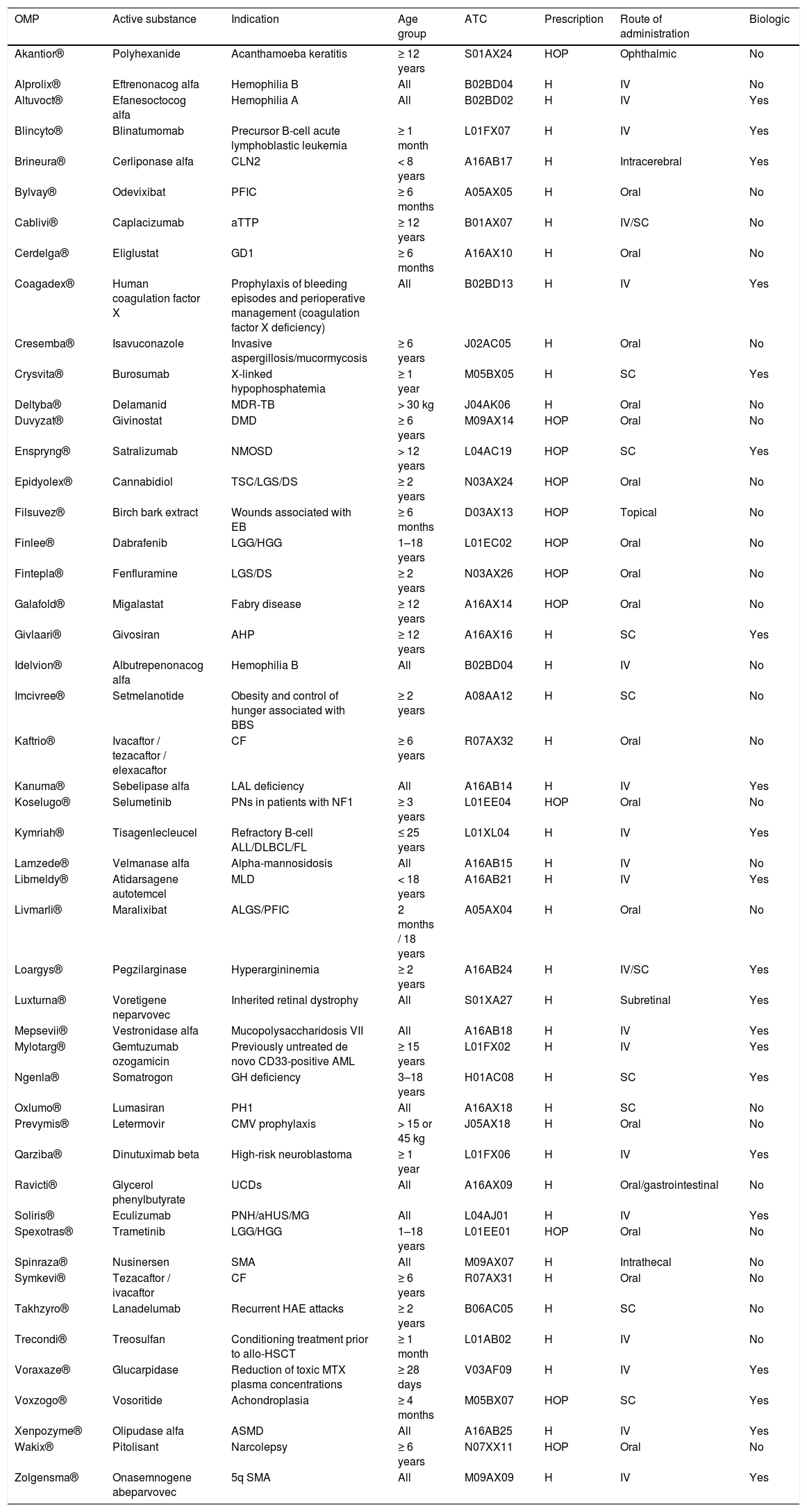
The availability of pediatric OMPs varied by age group. Of all those marketed in Spain, 14 (28.6%) were approved for all ages, while 45 (91.8%) had indications for use in patients aged more than 12 years (Table 2).
Orphan drugs authorized for pediatric use marketed in Spain in 2025: active substance, indication, age group, ATC classification, type of prescription, route of administration, and type of substance (biologic, other).
| OMP | Active substance | Indication | Age group | ATC | Prescription | Route of administration | Biologic |
|---|---|---|---|---|---|---|---|
| Akantior® | Polyhexanide | Acanthamoeba keratitis | ≥ 12 years | S01AX24 | HOP | Ophthalmic | No |
| Alprolix® | Eftrenonacog alfa | Hemophilia B | All | B02BD04 | H | IV | No |
| Altuvoct® | Efanesoctocog alfa | Hemophilia A | All | B02BD02 | H | IV | Yes |
| Blincyto® | Blinatumomab | Precursor B-cell acute lymphoblastic leukemia | ≥ 1 month | L01FX07 | H | IV | Yes |
| Brineura® | Cerliponase alfa | CLN2 | < 8 years | A16AB17 | H | Intracerebral | Yes |
| Bylvay® | Odevixibat | PFIC | ≥ 6 months | A05AX05 | H | Oral | No |
| Cablivi® | Caplacizumab | aTTP | ≥ 12 years | B01AX07 | H | IV/SC | No |
| Cerdelga® | Eliglustat | GD1 | ≥ 6 months | A16AX10 | H | Oral | No |
| Coagadex® | Human coagulation factor X | Prophylaxis of bleeding episodes and perioperative management (coagulation factor X deficiency) | All | B02BD13 | H | IV | Yes |
| Cresemba® | Isavuconazole | Invasive aspergillosis/mucormycosis | ≥ 6 years | J02AC05 | H | Oral | No |
| Crysvita® | Burosumab | X-linked hypophosphatemia | ≥ 1 year | M05BX05 | H | SC | Yes |
| Deltyba® | Delamanid | MDR-TB | > 30 kg | J04AK06 | H | Oral | No |
| Duvyzat® | Givinostat | DMD | ≥ 6 years | M09AX14 | HOP | Oral | No |
| Enspryng® | Satralizumab | NMOSD | > 12 years | L04AC19 | HOP | SC | Yes |
| Epidyolex® | Cannabidiol | TSC/LGS/DS | ≥ 2 years | N03AX24 | HOP | Oral | No |
| Filsuvez® | Birch bark extract | Wounds associated with EB | ≥ 6 months | D03AX13 | HOP | Topical | No |
| Finlee® | Dabrafenib | LGG/HGG | 1–18 years | L01EC02 | HOP | Oral | No |
| Fintepla® | Fenfluramine | LGS/DS | ≥ 2 years | N03AX26 | HOP | Oral | No |
| Galafold® | Migalastat | Fabry disease | ≥ 12 years | A16AX14 | HOP | Oral | No |
| Givlaari® | Givosiran | AHP | ≥ 12 years | A16AX16 | H | SC | Yes |
| Idelvion® | Albutrepenonacog alfa | Hemophilia B | All | B02BD04 | H | IV | No |
| Imcivree® | Setmelanotide | Obesity and control of hunger associated with BBS | ≥ 2 years | A08AA12 | H | SC | No |
| Kaftrio® | Ivacaftor / tezacaftor / elexacaftor | CF | ≥ 6 years | R07AX32 | H | Oral | No |
| Kanuma® | Sebelipase alfa | LAL deficiency | All | A16AB14 | H | IV | Yes |
| Koselugo® | Selumetinib | PNs in patients with NF1 | ≥ 3 years | L01EE04 | HOP | Oral | No |
| Kymriah® | Tisagenlecleucel | Refractory B-cell ALL/DLBCL/FL | ≤ 25 years | L01XL04 | H | IV | Yes |
| Lamzede® | Velmanase alfa | Alpha-mannosidosis | All | A16AB15 | H | IV | No |
| Libmeldy® | Atidarsagene autotemcel | MLD | < 18 years | A16AB21 | H | IV | Yes |
| Livmarli® | Maralixibat | ALGS/PFIC | 2 months / 18 years | A05AX04 | H | Oral | No |
| Loargys® | Pegzilarginase | Hyperargininemia | ≥ 2 years | A16AB24 | H | IV/SC | Yes |
| Luxturna® | Voretigene neparvovec | Inherited retinal dystrophy | All | S01XA27 | H | Subretinal | Yes |
| Mepsevii® | Vestronidase alfa | Mucopolysaccharidosis VII | All | A16AB18 | H | IV | Yes |
| Mylotarg® | Gemtuzumab ozogamicin | Previously untreated de novo CD33-positive AML | ≥ 15 years | L01FX02 | H | IV | Yes |
| Ngenla® | Somatrogon | GH deficiency | 3–18 years | H01AC08 | H | SC | Yes |
| Oxlumo® | Lumasiran | PH1 | All | A16AX18 | H | SC | No |
| Prevymis® | Letermovir | CMV prophylaxis | > 15 or 45 kg | J05AX18 | H | Oral | No |
| Qarziba® | Dinutuximab beta | High-risk neuroblastoma | ≥ 1 year | L01FX06 | H | IV | Yes |
| Ravicti® | Glycerol phenylbutyrate | UCDs | All | A16AX09 | H | Oral/gastrointestinal | No |
| Soliris® | Eculizumab | PNH/aHUS/MG | All | L04AJ01 | H | IV | Yes |
| Spexotras® | Trametinib | LGG/HGG | 1–18 years | L01EE01 | HOP | Oral | No |
| Spinraza® | Nusinersen | SMA | All | M09AX07 | H | Intrathecal | No |
| Symkevi® | Tezacaftor / ivacaftor | CF | ≥ 6 years | R07AX31 | H | Oral | No |
| Takhzyro® | Lanadelumab | Recurrent HAE attacks | ≥ 2 years | B06AC05 | H | SC | No |
| Trecondi® | Treosulfan | Conditioning treatment prior to allo-HSCT | ≥ 1 month | L01AB02 | H | IV | No |
| Voraxaze® | Glucarpidase | Reduction of toxic MTX plasma concentrations | ≥ 28 days | V03AF09 | H | IV | Yes |
| Voxzogo® | Vosoritide | Achondroplasia | ≥ 4 months | M05BX07 | HOP | SC | Yes |
| Xenpozyme® | Olipudase alfa | ASMD | All | A16AB25 | H | IV | Yes |
| Wakix® | Pitolisant | Narcolepsy | ≥ 6 years | N07XX11 | HOP | Oral | No |
| Zolgensma® | Onasemnogene abeparvovec | 5q SMA | All | M09AX09 | H | IV | Yes |
Abbreviations: AHP, acute hepatic porphyria; aHUS, atypical hemolytic uremic syndrome; ALGS, Alagille syndrome; ALL, acute lymphoblastic leukemia; allo-HSCT, allogeneic hematopoietic stem cell transplantation; AML, acute myeloid leukemia; ASMD, acid sphingomyelinase deficiency; ATC, Anatomical Therapeutic Chemical classification; aTTP, acquired thrombotic thrombocytopenic purpura; BBS, Bardet-Biedl syndrome; CF, cystic fibrosis; CNL2, neuronal ceroid lipofuscinosis type 2; CMV, cytomegalovirus; DLBCL, diffuse large B-cell lymphoma; DMD, Duchenne muscular dystrophy; DS, Dravet syndrome; EB, epidermolysis bullosa; FL, follicular lymphoma; GD1, Gaucher disease type 1; GH, growth hormone; H, reserved for hospital use; HAE, hereditary angioedema; HGG, high-grade glioma; HOP, hospital-only prescription; IV, intravenous; LAL, lysosomal acid lipase; LGG, low-grade glioma; LGS, Lennox-Gastaut syndrome; MDR-TB, multidrug-resistant tuberculosis; MG, myasthenia gravis; MLD, metachromatic leukodystrophy; MTX, methotrexate; NF1, neurofibromatosis type 1; NMOSD, neuromyelitis optica spectrum disorder; OMP, orphan medicinal product; PFIC, progressive familial intrahepatic cholestasis; PH1, primary hyperoxaluria type 1; PN, plexiform neurofibroma; PNH, paroxysmal nocturnal hemoglobinuria; SC, subcutaneous; SMA, spinal muscular atrophy; TSC, tuberous sclerosis complex; UCD, urea cycle disorder.
Based on the ATC classification, the most common therapeutic group among pediatric OMPs marketed in Spain was Group A (alimentary tract and metabolism), which accounted for 30.6% of the drugs, followed by Group L (antineoplastic and immunomodulatory agents), which accounted for another 20.4% (Table 2).
All the pediatric OMPs in the Spanish market required a prescription. Thirty-seven (75.5%) were reserved for hospital use, and the remaining 12 were restricted as hospital-only prescription drugs. The most common routes of administration were the intravenous route (38.8%) and the oral route (34.7%). Twenty-one (42.9%) were biologics (Table 2).
DiscussionFrom a practical standpoint, this systematic compilation of OMPs with pediatric indications marketed in Spain provides a structured and up-to-date overview of their real-world availability in the health care system. This approach, based on an individualized review of SmPCs and official regulatory sources, facilitates the identification of usage patterns, therapeutic gaps, and areas of opportunity in the development of treatments for pediatric patients with RDs.
The results of this study show that, despite the current European regulatory framework that supports the development of OMPs, those authorized for use in the pediatric population continue to be a minority of the total available, and actual access to them in Spain is limited.10,14,15
Only half of the current orphan drug designations are for drugs authorized for use in the pediatric population, and only one-quarter of these are for exclusive pediatric use. This finding is particularly relevant, given that most rare diseases have onset in childhood and that a significant proportion of affected individuals are minors.4–6 The small percentage of medications specifically developed for the pediatric population suggests that, despite the EU Pediatric Regulation and the PIPs, the development of medicinal products targeted at this population continues to be insufficient.15
The institution of the Paediatric Committee and the requirement to submit a PIP in the early stages of development were intended to ensure the generation of evidence in the pediatric population and to reduce the off-label use of medications. However, the current exemptions from the PIP requirement for certain medications and the low priority of pediatric RDs for pharmaceutical companies may help explain the low proportion of medicinal products specifically developed for children.15,26,27
Although a high proportion of pediatric orphan designations eventually received an EU marketing authorization, some of these drugs were subject to conditional marketing authorizations or marketing authorizations under exceptional circumstances.12,17 This status can affect subsequent decisions at the member state level regarding funding.16,18
In Spain, about 75% of patients with RDs are children, which amounts to more than 2 000 000 affected individuals. It is estimated that treatment is available for only 5% of these diseases, while the remaining 95% must rely on information from clinical case reports or even conference abstracts, the off-label use of medications, compassionate use of investigational drugs, foreign medications, or compounding.4,8,9,28,29
In hospital pharmacy departments, compounding is often the only available treatment option for pediatric patients with RDs when there are no authorized or commercially available medications. In most cases, treatment involves the adjustment of dosage forms of drugs authorized exclusively for adults, due to the lack of pediatric alternatives in the market, or novel compounded formulations are developed in the absence of existing drugs to start from.8,9 Sharing experiences and creating databases like the Online Platform for Compounded Medications for Rare Diseases are essential toward providing a broader range of options to patients and reducing variability in care.30
From a therapeutic standpoint, the breakdown of orphan drugs by ATC group shows that those targeting the alimentary tract and metabolism account for a significant proportion, while the proportion of antineoplastic and immunomodulatory agents (the predominant group of OMPs in adults) is lower in pediatric patients. This finding is consistent with the historical lack of development of pediatric antineoplastic drugs and underscores the need to promote research in this area.
The high percentage of biologics among the marketed pediatric OMPs (42.9%) reflects a trend toward advanced and highly complex therapies, which have the potential to modify the course of certain diseases but also have significant economic and organizational implications for health care systems.
In recent years, various national and international initiatives have been developed to improve knowledge, coordination, and research in RDs, with a potential impact on the development of and access to pediatric OMPs. In Spain, we ought to highlight the role played by the FEDER umbrella organization of patient associations,6 the Biomedical Research Networking Center on Rare Diseases (CIBERER), whose objective is to promote research on RDs,3 and the Red ÚNICAS, a network created in 2023 with the aim of improving the diagnosis and treatment of pediatric RDs.31 In addition, the Rare Diseases Patient Registry (RePER) of the Instituto de Salud Carlos III (Institute of Health Carlos III) facilitates the identification and follow-up of patients, promotes research, increases the visibility of these diseases and guides decision-making for adequate health care planning and resource allocation.32
Currently, at the European level, access to OMPs is undergoing a regulatory overhaul. The EU Pharma Package negotiating position, the launch of the EU Rare Disease Action Plan, and the gradual implementation of Regulation (EU) 2021/2282 on Health Technology Assessment (HTAR), in effect since January 2022, are shaping a new framework aimed at harmonizing processes, reducing duplication among member states, and facilitating faster and more consistent access to novel treatments, while maintaining national authority over pricing, funding, and reimbursement.23
At the national level, there have been strategic initiatives and regulatory reforms in Spain that directly affect the access to medicines. The implementation of the Spanish Pharmaceutical Industry Strategy, the update of the National Strategy for Rare Diseases, and progress on regulatory frameworks such as the Draft Bill on Medicines and Medical Devices and the Royal Decree on Health Technology Assessment offer an opportunity to promote equity, efficiency, and consistency in the access to innovative products. At the same time, the ACs also continue to develop specific plans and strategies, strengthening health care coordination and referral systems, which helps reduce interregional inequalities and reinforce the cohesion of the NHS.23
There are limitations to this study owing to its descriptive design and the use of secondary sources; however, the use of official regulatory sources and official nationwide data and reports allowed us to provide a comprehensive and up-to-date overview of the current situation.
Another limitation is that we did not directly evaluate aspects such as wait times for accessing medications. The lack of standardized, systematic, and comparable data, combined with the decentralized structure of the Spanish health care system (in which authority has been devolved to the ACs) makes it difficult to quantify these aspects. Furthermore, access times depend on multiple regulatory, clinical, and economic factors, which hinders the calculation of overall estimates or robust comparisons.
ConclusionsAlthough there is a regulatory relationship between OMPs and pediatric drugs, the results highlight the need for a more integrated approach to the development of pediatric OMPs and their access. As of December 31, 2025, orphan drug designations with a pediatric indication in Spain accounted for approximately half of the total, and only a small proportion of these were for exclusive pediatric use. Furthermore, a significant portion of the pediatric OMPs authorized in Europe were granted marketing authorizations under exceptional circumstances or conditional marketing authorizations, reflecting the challenges involved in generating evidence in this particular population.
In Spain, most OMPs authorized for pediatric use at the EU level are granted a marketing authorization, but not all of them are ultimately commercialized or funded by the public health care system. Only a very small proportion of funded medications are treatments intended exclusively for pediatric use, despite the fact that most rare diseases manifest in childhood.
We observed significant differences between age groups within the pediatric population, as well as a heterogeneous distribution of therapeutic groups. The high percentage of biologic agents among the marketed pediatric OMPs suggests a landscape of innovation with transformative potential, although one accompanied by significant organizational and economic challenges.
Overall, pediatric OMPs clearly continue to be a minority of all available OMPs, underscoring the need to step up clinical research in pediatric populations, promote collaborative projects, and ensure more streamlined, equitable, and coordinated access to these treatments in order to improve the care of children with RDs.
This study provides an up-to-date and systematic overview of the current situation of pediatric orphan drugs in Spain based on official regulatory sources. It also offers a structured compilation of medicinal products marketed in Spain with a pediatric indication, which may be useful for health care professionals in this field.
FundingThis research project did not receive specific financial support from funding agencies in the public, private or not-for-profit sectors.
The authors have no conflicts of interest to declare.